Youth Librarian AKA Art Teacher
Many Youth Librarians have been asked to become overnight Art Teachers. Your young participants will probably remember all their lives the art projects that they created in your library. I still remember the first comments my Kindergarten teacher made about my elephant. She liked it. The next outside of my house art project memory were those wonderful macaroni plates we made in Vacation Bible School. We would paste macaroni and other shell pasta onto a paper plate and then spray with gold or silver. They turned out pretty good but I am afraid we all must have had a buzz from a room full of spray paint. I grew up before they restricted those kinds of paints and it seemed like spray paint was the favorite media. We also attended an after school art event at a neighborhood kids club. It made such an impact that I still remember it. My 40 something year old brother made me a candy dish when he was 6 years old that I still have. We all have art memories, hopefully they are good ones.
Youth Librarians have a unique opportunity to enhance reading and creativity skills at the same time. It's important to take a very positive approach with groups of all ages. Don't become so frazzled with the details of trying to set up the art program and teach it that you forget your primary goal. Here are a few tips to remember when presenting art projects to groups:
1. Be prepared. When I teach a traditional in class art workshop or library art program, I begin preparing tote bags days ahead that have the basic supplies children, teens, and adults will need. It will take more time to prepare then you realize so it's good to get an early start.
2. Test all projects before you let others make it. It's important to test your projects. You will feel more confident when you complete it in front of your group. If you have a child or young relative let them test it too. I have a 6 year old niece that LOVES to do art projects every time she visits. I gave her a project one day that required tearing paper. She became very bored, very quickly. The project is perfect for older kids, but not her age group.
3. Be and stay POSITIVE with your group. The art experience should be a positive experience for you and your group. Normally this isn't a problem. People of all ages love to create and creating art is good for your health too! Anticipate challenges that may come up beforehand so you won't be thrown by them.
4. If a child or teen becomes frustrated and complains that they have made a mistake in their project, remind them that there are no mistakes in art. Rarely, but it happens, a child will want to start over in the middle of their project. Usually the "mistake" is minor. I tell them the story of Marcel Duchamp a famous artist whose glass art was damaged while being transported to the art gallery for an important show. He insisted that the art be shown with the crack in it. The "mistake" became part of the artwork. He coined the phrase "there are no mistakes in art." Still, accidents happen and it is good to have a few extra project replacements on hand for emergencies.
5. I try not to be too specific when presenting instructions for art lessons. You want to allow enough room for individual creativity. There is no right or wrong way to create a work of art. Each person will have their own style and way of completing the project. You will be pleasantly surprised at how much creativity you see when you leave room for individual differences in your presentation. Don't do it for them.
6. Don't judge. Never say anything negative about someone's artwork. Don't guess what it is. Let them tell you about their artwork and give plenty of praise.
7. Put parents to work. If parents want to stay in the workshop let them help their own child. If you have enough supplies let them complete one also. They love it! The kids love it!
8. Allow last minute sign ups. Bring extra supplies for last minute sign ups or drop ins-within reason.
9. Show it off. Ask permission of parents first, but take plenty of digital photos of the successful art program. If you have room, hang art projects in the library or create a "gallery space" in the library and invite parents to an art opening. Be sure to return art projects to their makers.
10. Do it again. Parents will ask you for a schedule of more art programs. Invite local artists and art performers to come to the library often.
Several years ago there used to be an art program on our local educational television station. The star of the
program would reach into his treasure chest and pull out a project and then show
the viewers how to do it. There are some art projects that I like to think
of as the Youth Librarians treasure chest of ideas. They are general
themes and ideas that can be used in reading circles, after-school and a variety
of art programs.
program on our local educational television station. The star of the
program would reach into his treasure chest and pull out a project and then show
the viewers how to do it. There are some art projects that I like to think
of as the Youth Librarians treasure chest of ideas. They are general
themes and ideas that can be used in reading circles, after-school and a variety
of art programs.
Click Here for Puppet Art Ideas

Open This for Animal Art Ideas

Click Here for Dinosaur Art Ideas
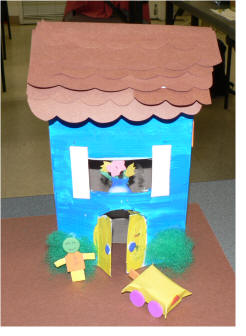
 Click
Here for Recycling Art Ideas
Click
Here for Recycling Art Ideas

 You
Have Reached the End of Week 1
You
Have Reached the End of Week 1