
Presidential Libraries are good resources for the classroom teacher.
   |
|
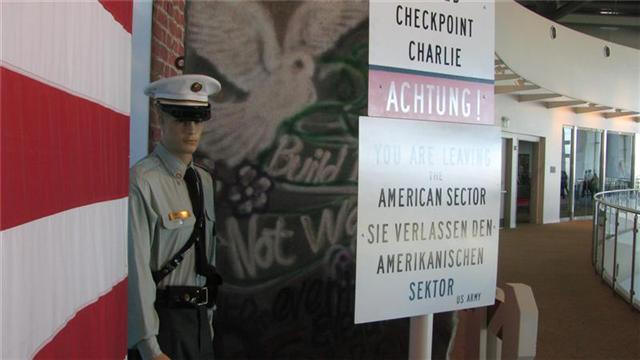 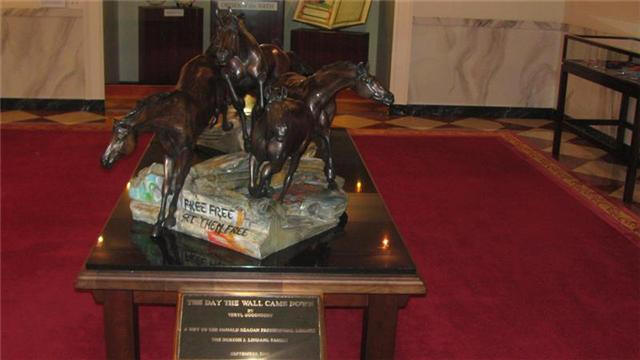 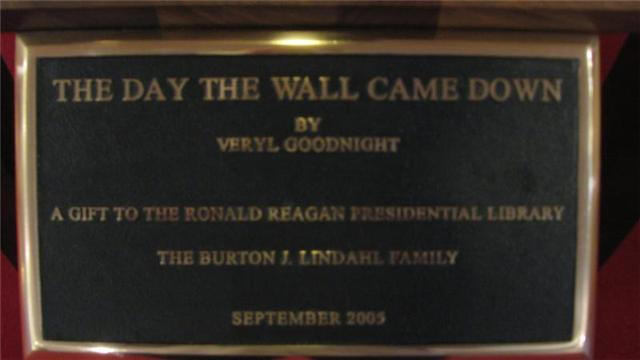 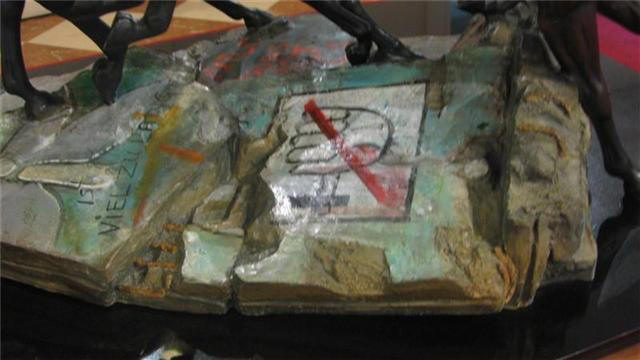 |
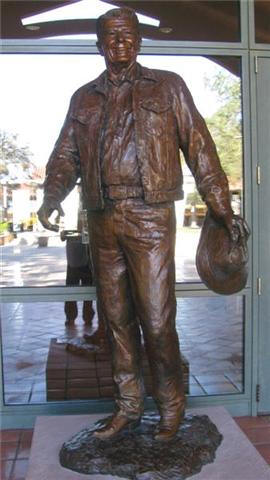
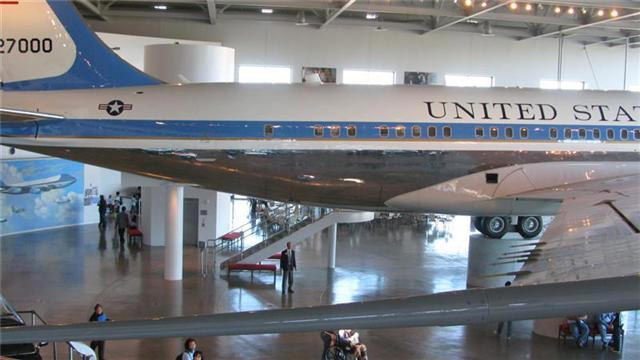
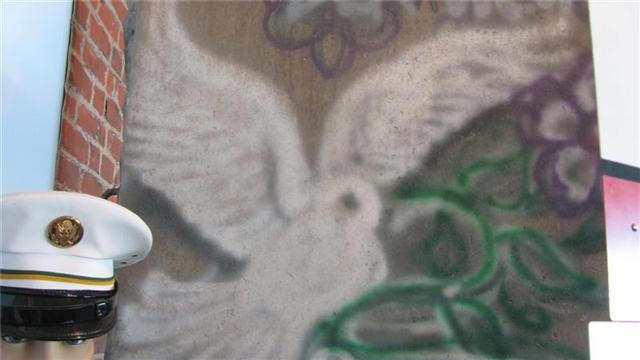
Art Teacher on the Net's visit to the Ronald Reagan Library in Simi Valley, California.
February is a perfect month for teachers to take their classes to presidential libraries or visit them virtual online. Ask for lesson plans and teacher packets.
Ronald Reagan Library Education Resources for Teachers
http://www.reagan.utexas.edu/education/For%20Educators/foreducators.html
Visit the Presidential Libraries online at the National Archive website. Take virtual tours and locate educational materials for many of the presidents.
_____________________________________
Favorite Paintings of Presidents
George W. Bush said in a debate with John Kerry that The Rio Grande is one of his favorite paintings. The following transcript reveals what the painting means to him personally.
In the Oval Office, there's a painting by a friend of Laura and mine named -- by Tom Lea. And it's a West Texas painting, a painting of a mountain scene.
And he said this about it.
He said, "Sarah and I live on the east side of the mountain. It's the sunrise side, not the sunset side. It's the side to see the day that is coming, not to see the day that is gone. "
I love the optimism in that painting, because that's how I feel about America . . .
(Bush quoted in the Washington Post Online)
You can see the painting at
Art Net
http://www.artnet.com/Magazine/news/artnetnews/artnetnews4-4-1.asp
_________________________________________________________________________________________________________
Bill Clinton at a recent unveiling of his presidential portrait spoke of the meaning he gleaned from the past presidential portraits. The following transcript reveals the meaning and solace he gleaned from these masterpieces.
I like John Singer Sargent's portrait of Theodore Roosevelt over there. But there's one over in the Cabinet Room by a man named Laszlo of Theodore Roosevelt. I used to look at it all the time when I felt bad and I worried, "Was the war in Bosnia going to come out all right? Would the Kosovar refugees ever be able to go home?"
Because if you look at that picture, Theodore Roosevelt, who was known as our most macho, bully, self-confident president, you look at that picture and you see here's a human being who's scared to death and not sure it's going to come out all right. And he does the right thing, anyway. That's what I saw in that picture.
(Clinton quoted in the Washington Post Online)
The following website link will take you to a portrait of the Laszlo and Sargent paintings.
JSS Gallery
http://www.jssgallery.org/Other_Artists/Philip_Alexius_de_Laszlo/President_Theodore_Roosevelt.htm

Did you know that former U.S. President Jimmy Carter is an artist?
Visit Jimmy Carter (The Carter Center) to see his artwork.
Lesson Plans
http://www.americanpresidents.org/classroom/overview.asp
Did you know the White House has an art collection? Find out more at
http://www.whitehouse.gov/about/history/art/
Take your own virtual trip of the White House Art Collection at
White House-Selected Works
http://www.whitehouse.gov/history/art/selectedworks.html

Washington Crossing the Delaware is a painting that is well
known to most school children through reproductions hanging
in classroom and school offices. The real painting hangs in the Metropolitan
Museum of Fine Arts in New York city. It is 12 feet 2/5 inches by
21 feet and l/4 inches. It was painted by a German born artist who
later emigrated to the United States. His name was Emmanuel Leutze.
The painting commemorates one of the most significant battles in American
History. On Christmas evening in 1776 Washington crossed the Delaware river on his way to defeat the Hussian and British troops,
a turning point for the Continental Army in the American Revolutionary War.
Questions to Ask Yourself When Describing This
Painting.
What is the title of the work of art?
Who is the artist?
What is the subject matter?
Describe the painting in such a way that someone who has never seen this
work of art could get a mind's eye view of the painting.

Questions to Ask Yourself When Formally Analyzing
This Painting.
Explore the lines, colors, textures, space, and shapes of the painting.
What is Leutze telling us in this painting? How does he "say" it through
the elements of composition? First let's take a look at the focal point
of this painting. Our eye goes directly to the figure of George Washington,
leader and first president of the United States. How has the artist
lead us to this central figure? Washington is framed by the natural
light behind him. The light encircles the backdrop of the painting
and at the same time creates a clear silhouette view of the monumental figure.
The strong diagonal line of the flag and oars lead us, actually point to
the central figure. The figure of Washington stands vertically, creating
a strong, solid forceful balance and stationary point in this scene. Washington
looks calm and comfortable standing on this boat that must have been rocky
on this frozen river. How does the artist create a sense of drama and
crowed space? Do you feel the labor involved in rowing this very crowded
and historical boat? How does the artist take us back into space? Where
are we the viewer spatially in relationship to the you. Are the textures
smooth, rough, shiney, matte? Are the shapes biographic? geometric?
Is there movement in the painting? Is the flag waving? What
is the time day? What is the weather like?
Questions to Ask Yourself When You are Interpretating
this Painting?
What does the viewer learn about the leader George Washington from the placement
and technical aspects employed by the artist Leutze?
What is the function or purpose of the painting?
Stylistically it is considered to be a Romantic painting? What are
the Romantic aspects of this painting?
How does Leutze represent the emotional aspects of a Revolution?
This painting inspired Leutze and other German artists in their own Revolution
of the later 19th century. How does Leutze reveals his interpretation
of the importance of this event in this painting?
You can learn more about this painting at the website references below:
Metropolitan Museum of Art
http://www.metmuseum.org
See the painting and a game your
students can play to learn more about this
painting at the Met Museum.
The United States Mint
Lesson Plans
50 State Lesson Plans
Including the
New Jersey Commemorative Quarter that
features this painting on the back.
See a movie of the "Washington Crossing the Delaware" Museum Website online.
http://www.state.nj.us/travel/virtual/tendays/intro.html
Back to Art Teacher on the Net Homepage